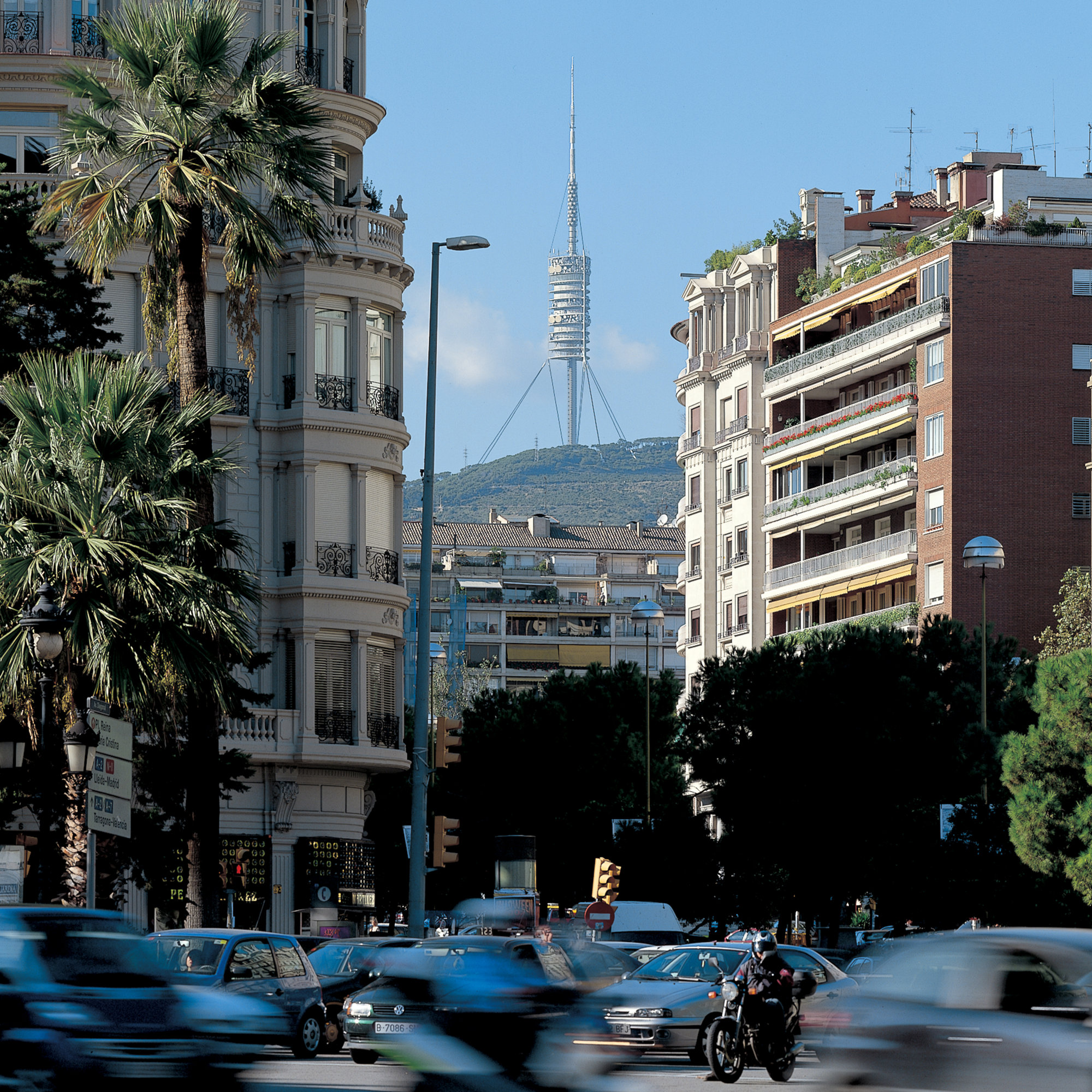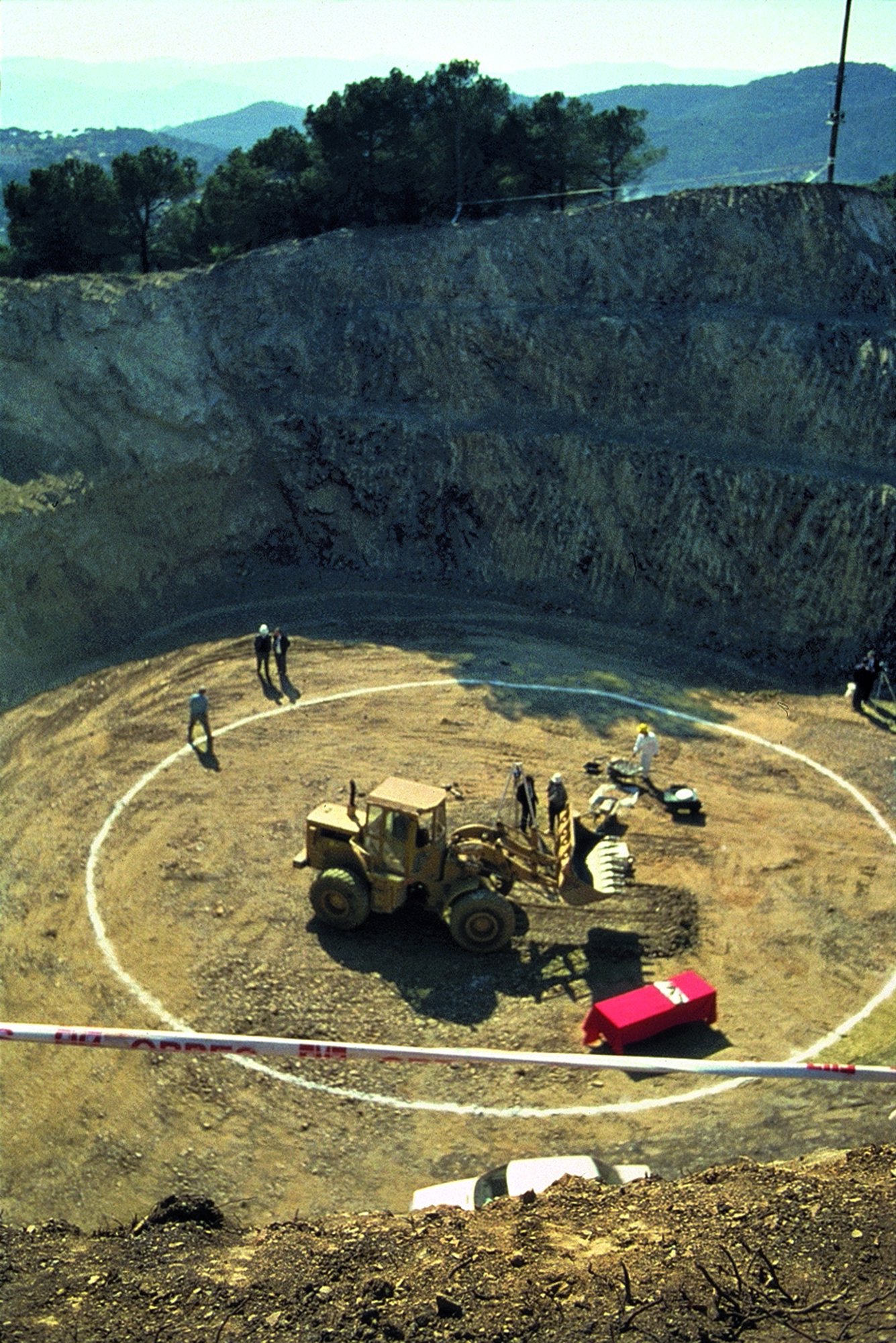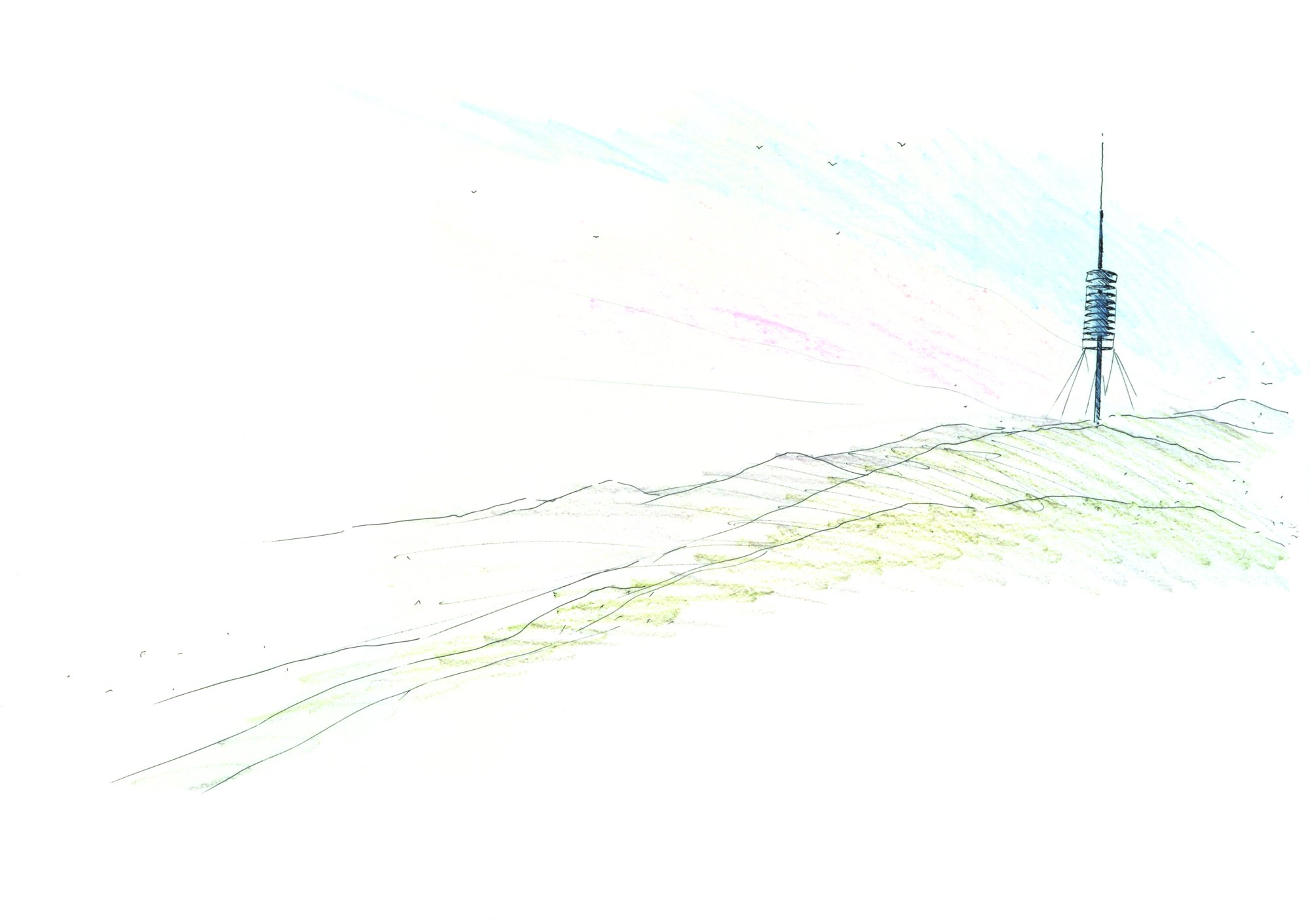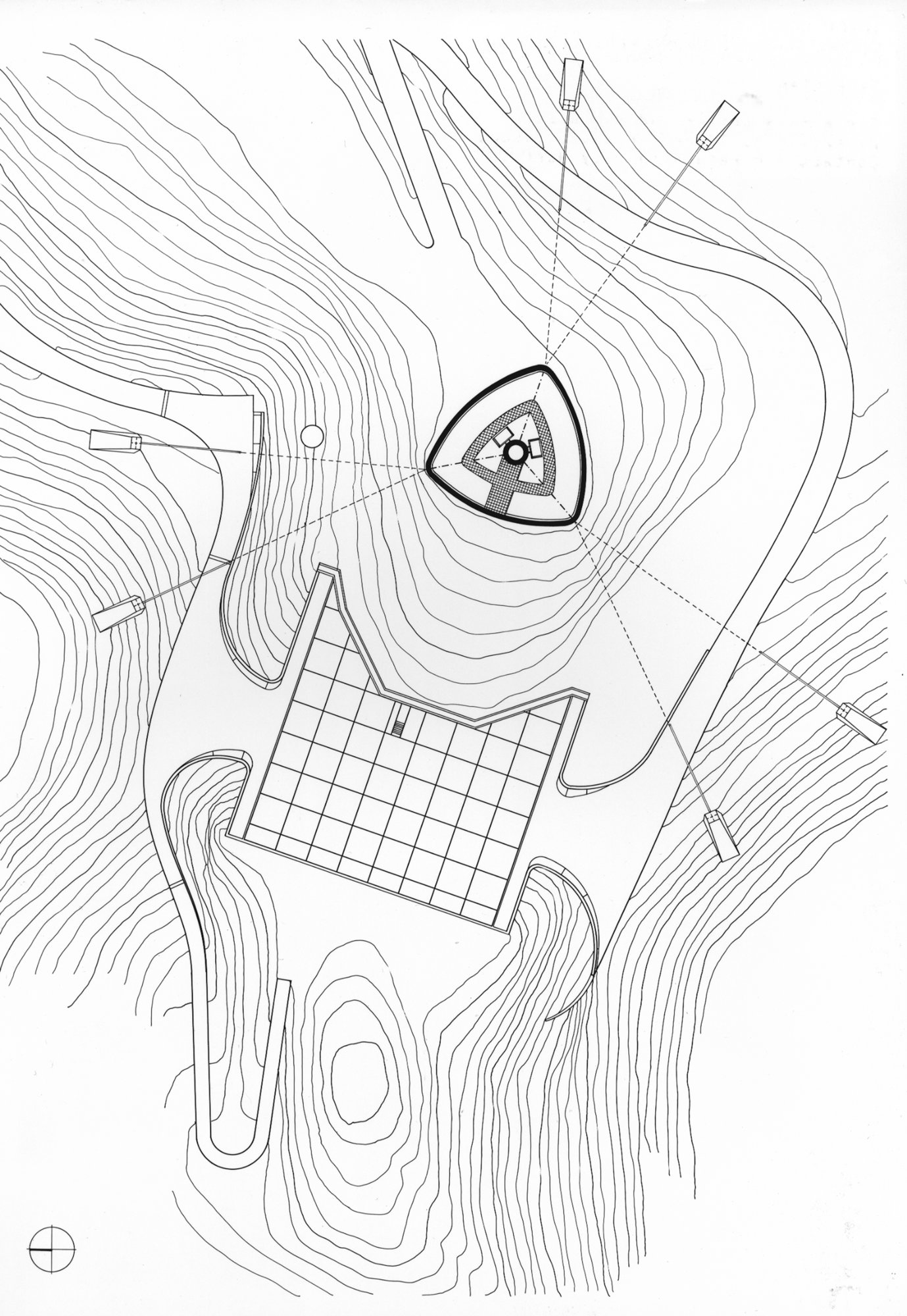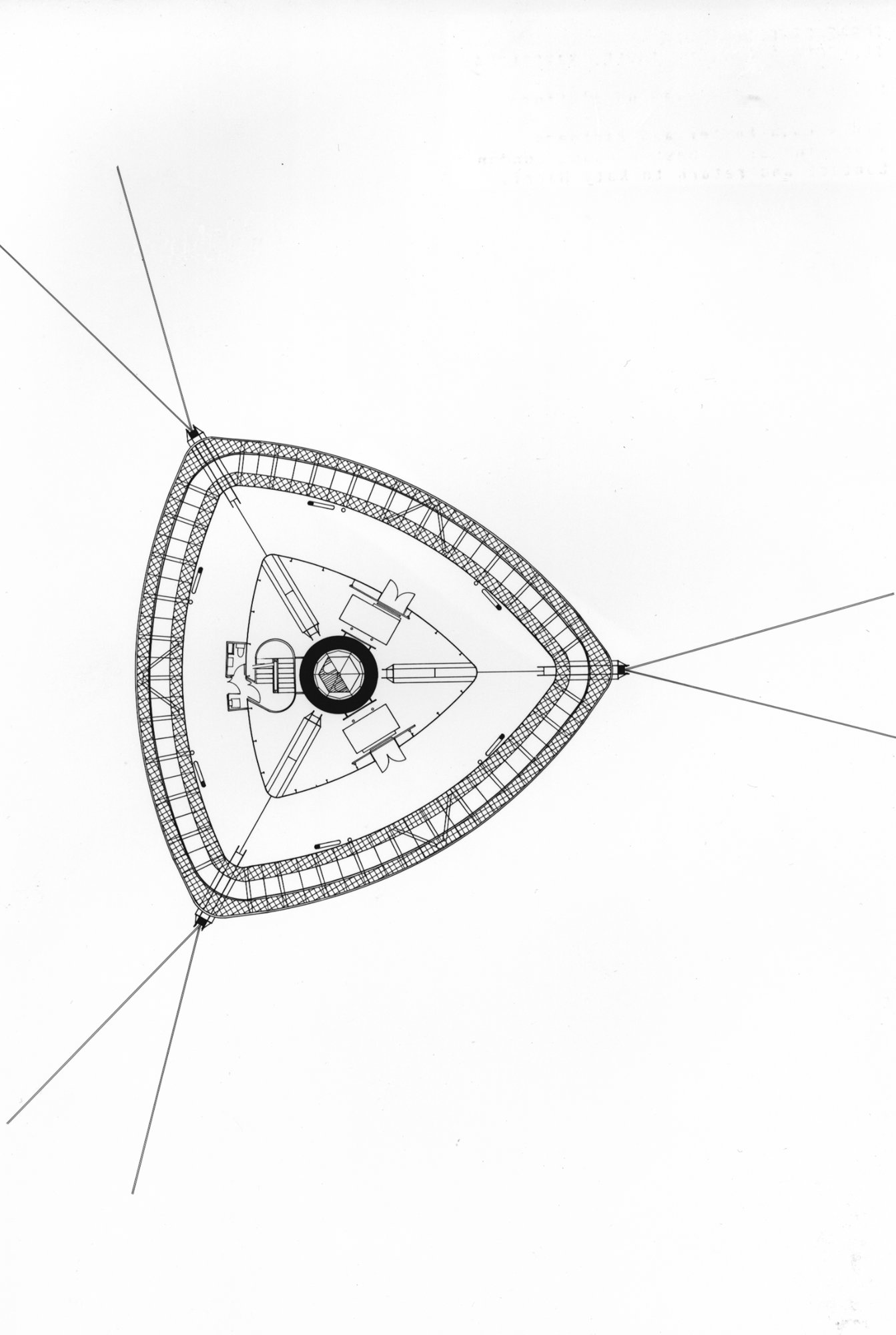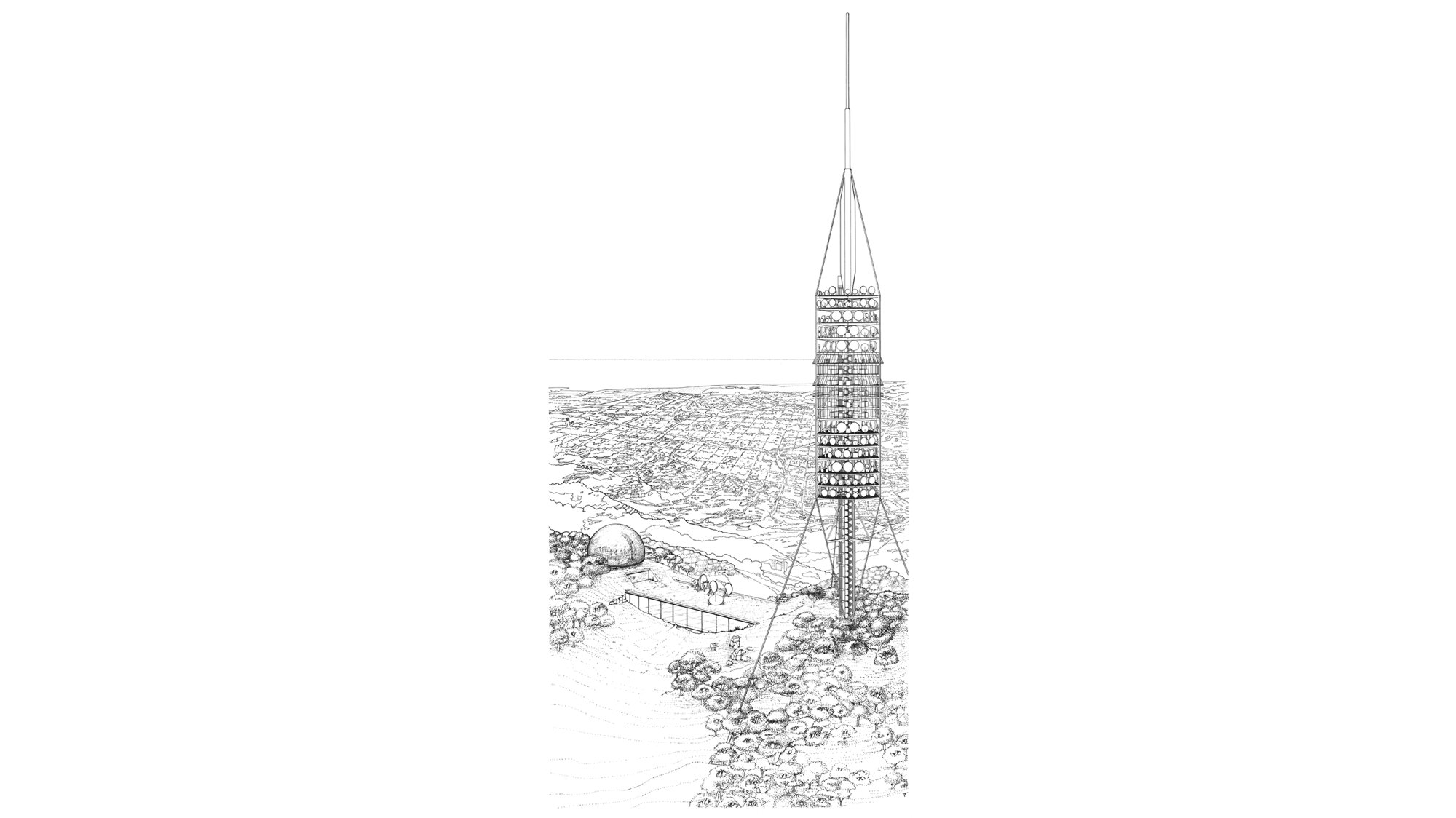


In anticipation of the communications requirements of the 1992 Olympic Games, Barcelona was facing an explosion of transmission masts on the Tibidabo mountainside. Sensing the environmental impact this would have, Mayor Pasqual Maragall decided that the communications and broadcasting infrastructure for the entire region should be coordinated. He convinced the three primary players - national and Catalan television and Telefonica - to build a shared telecommunications tower. The competition brief posed the problem as a balancing act between operational requirements and the desire for a technological symbol. The solution reinvents the telecommunications tower from first principles.
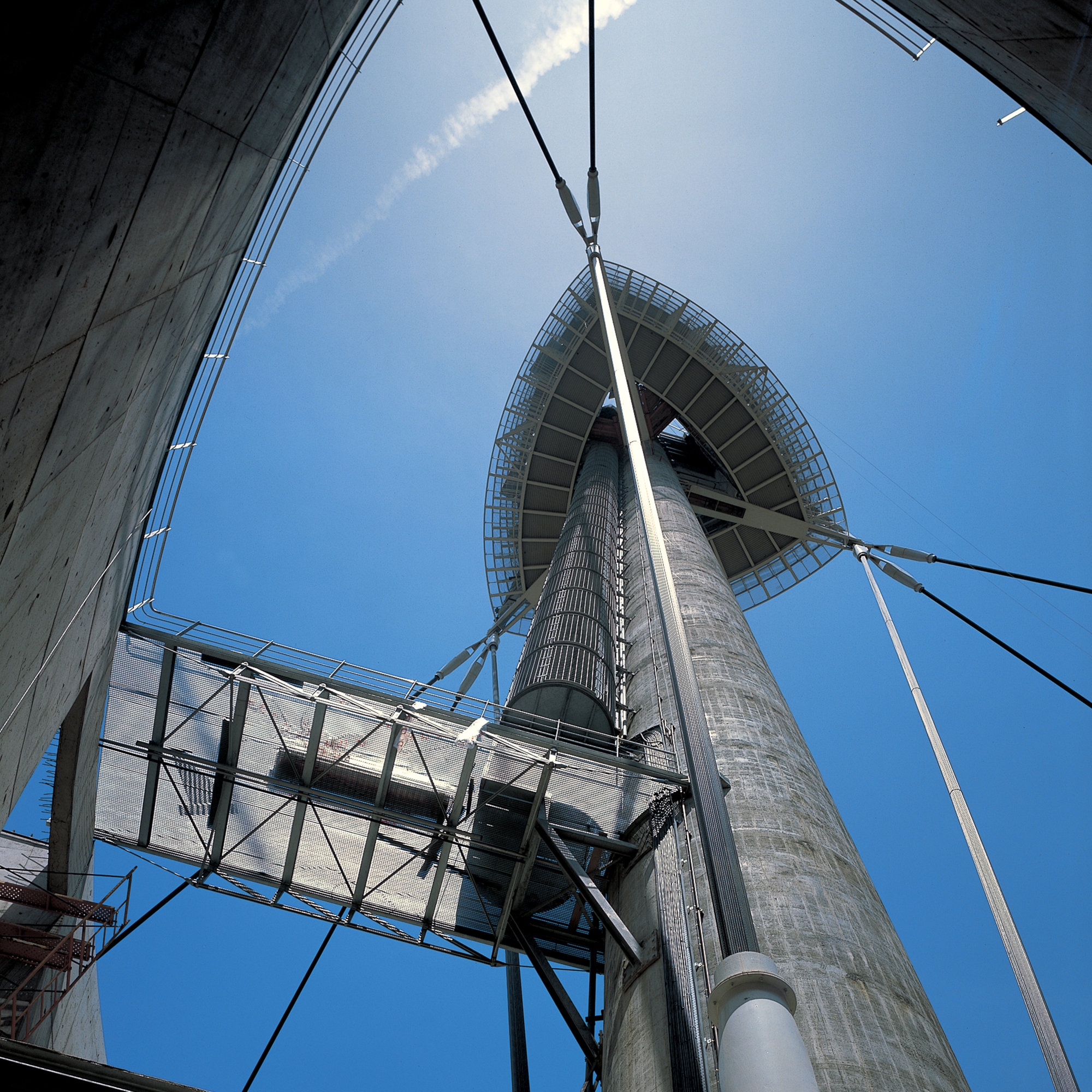
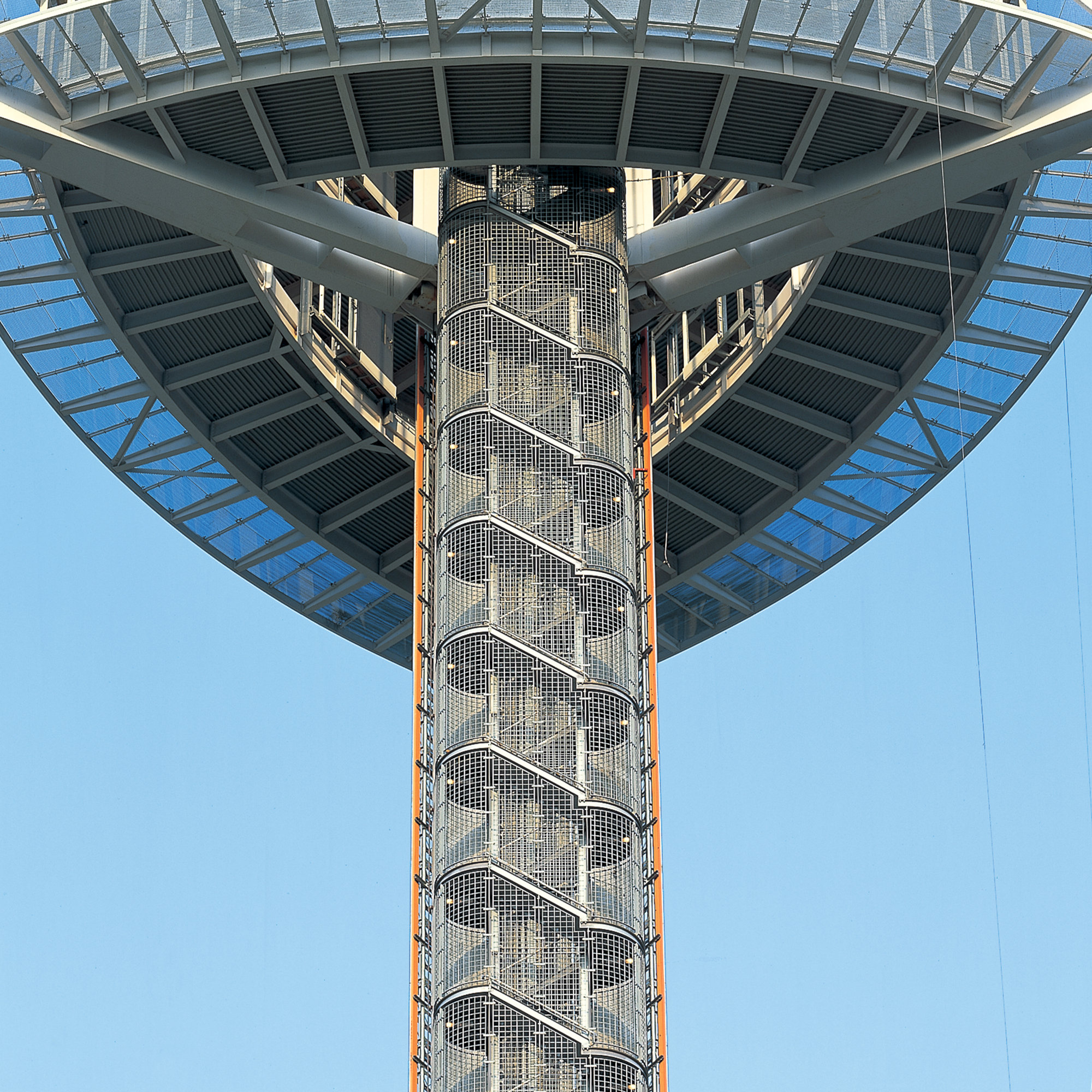
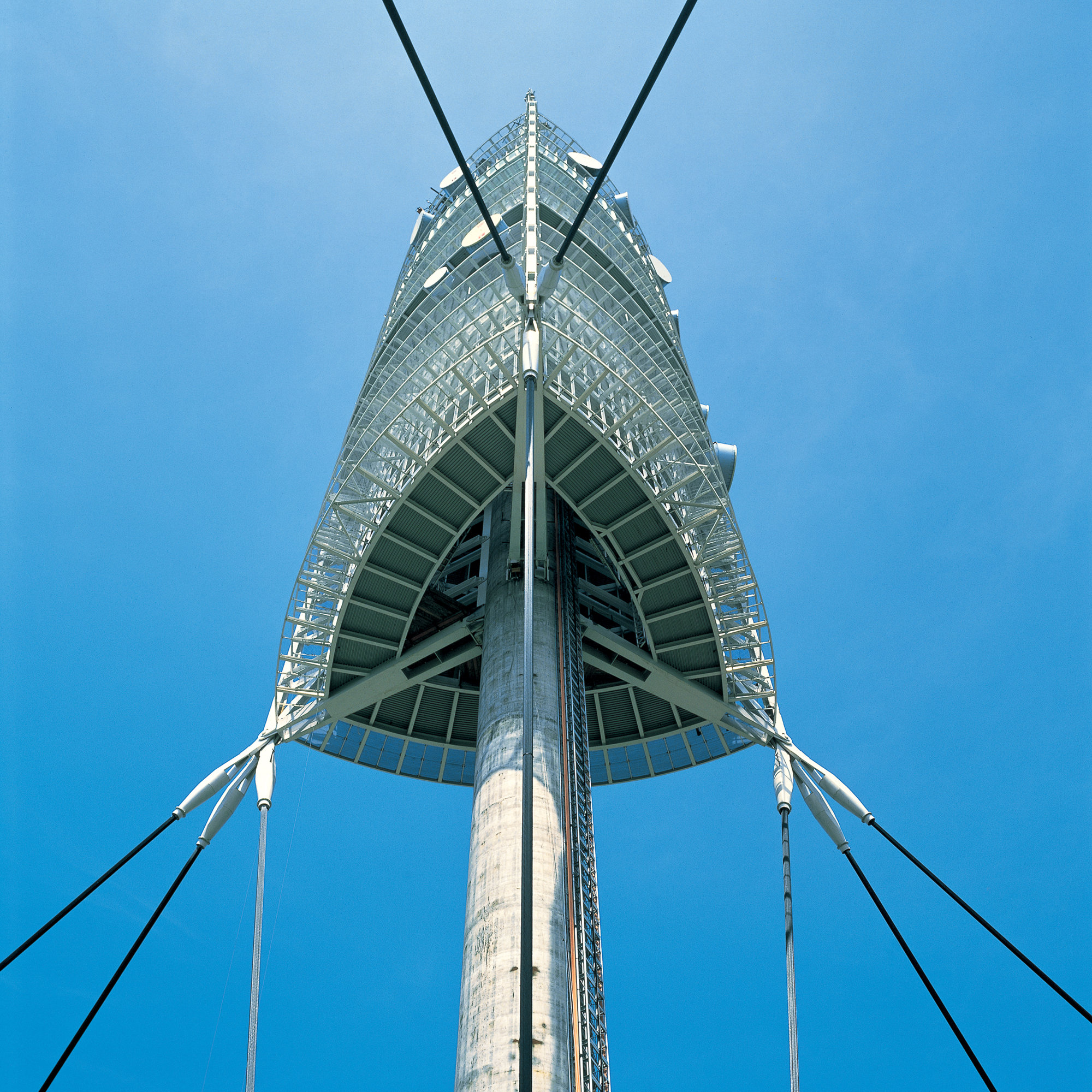
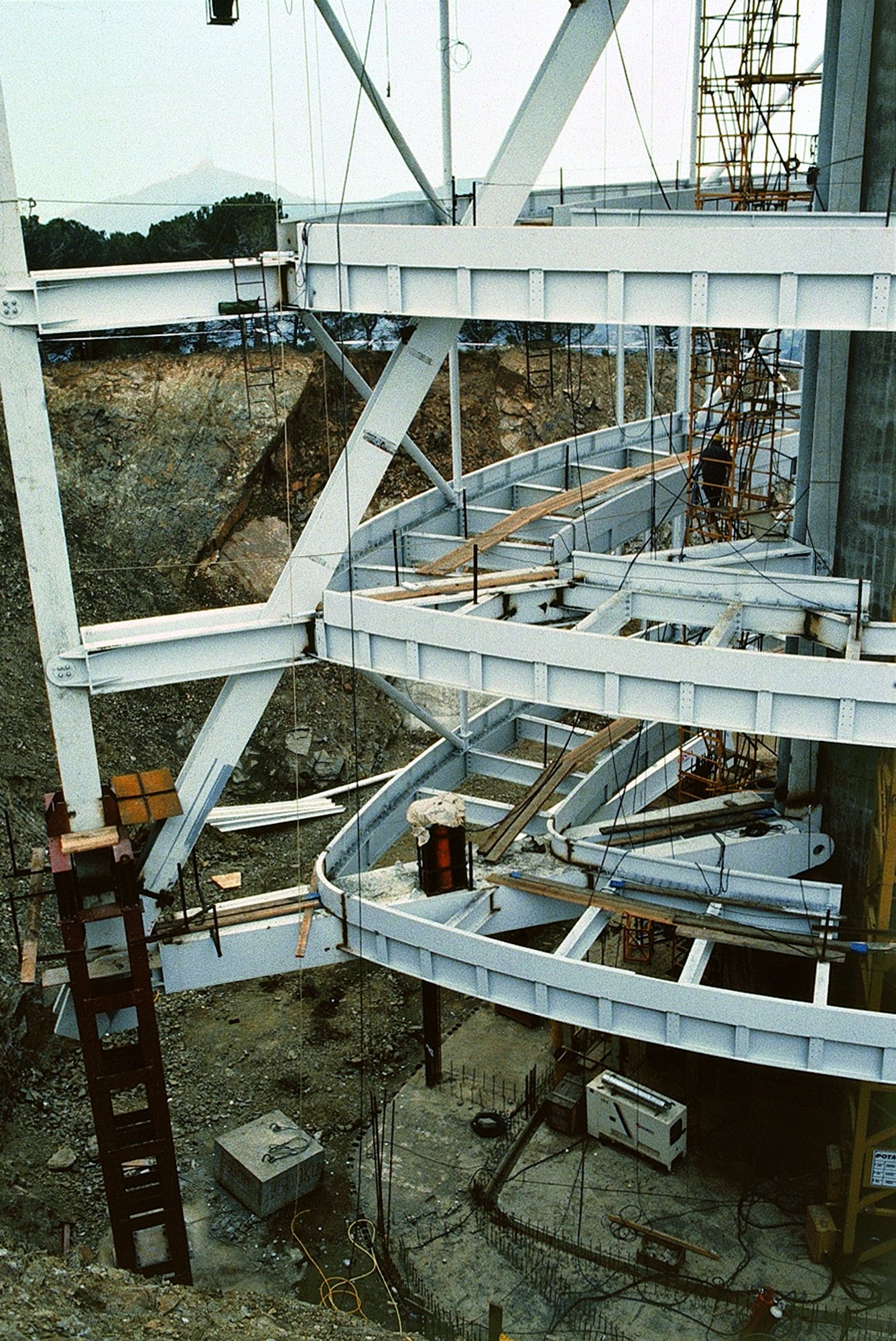
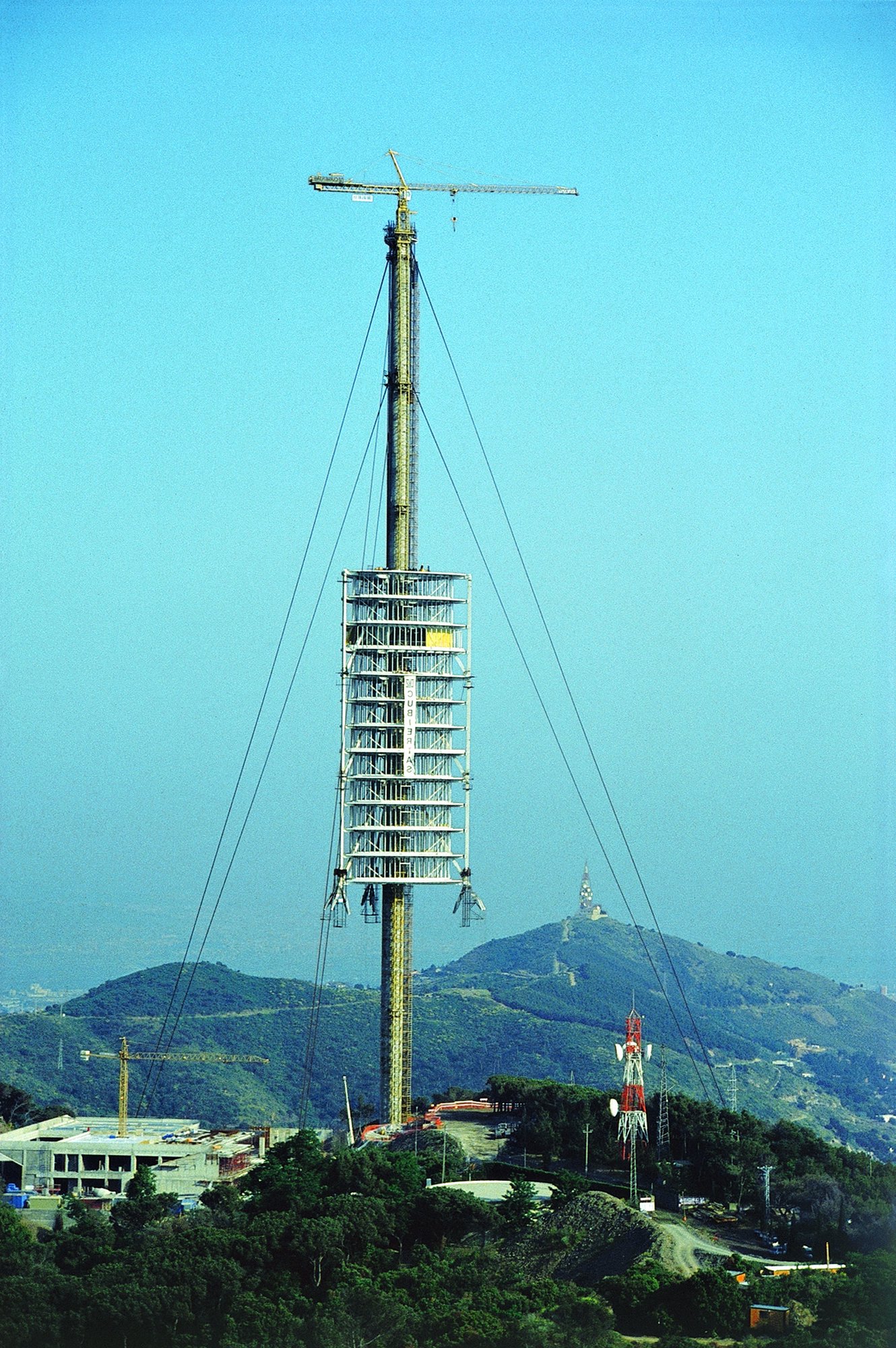
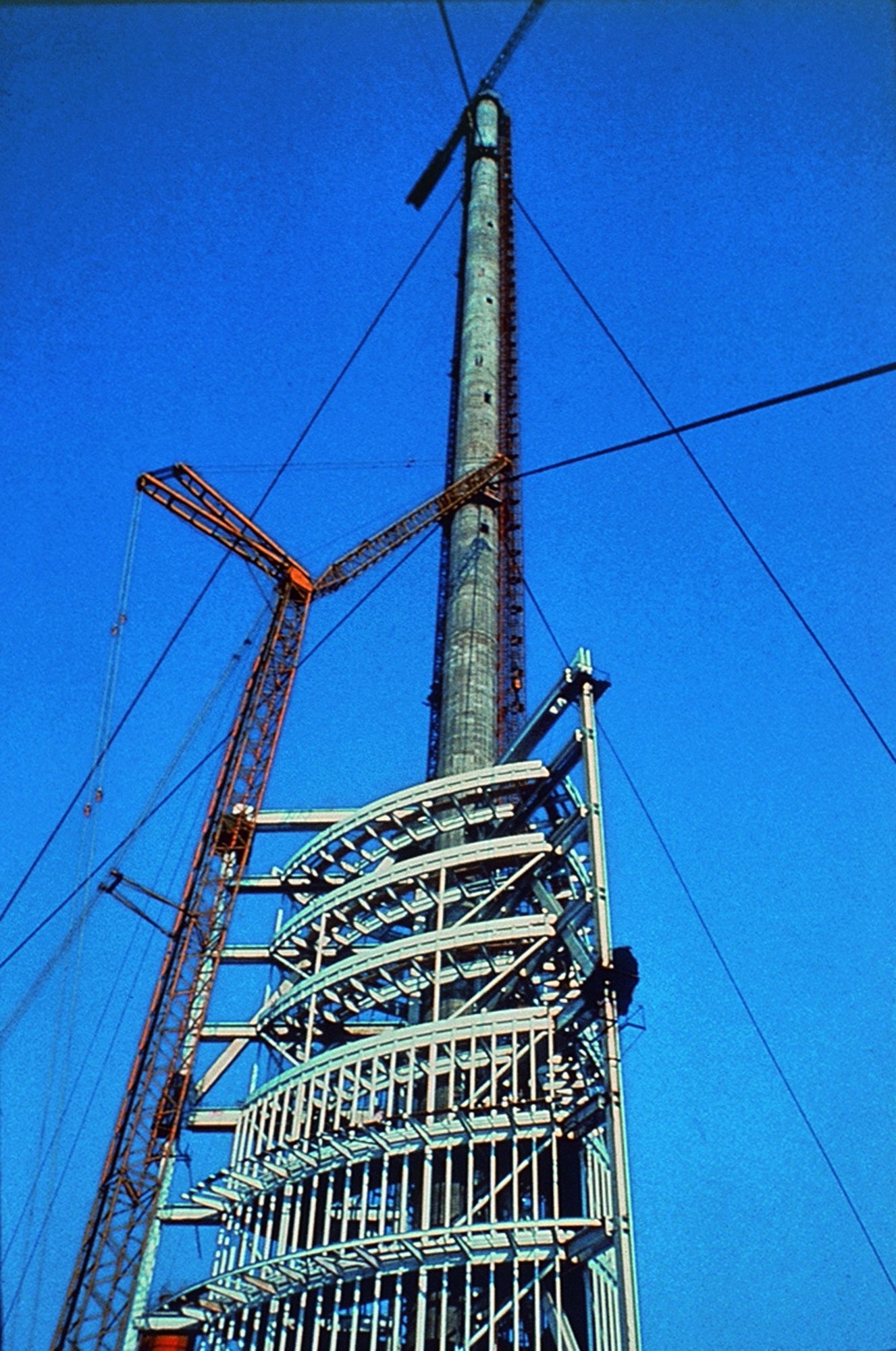
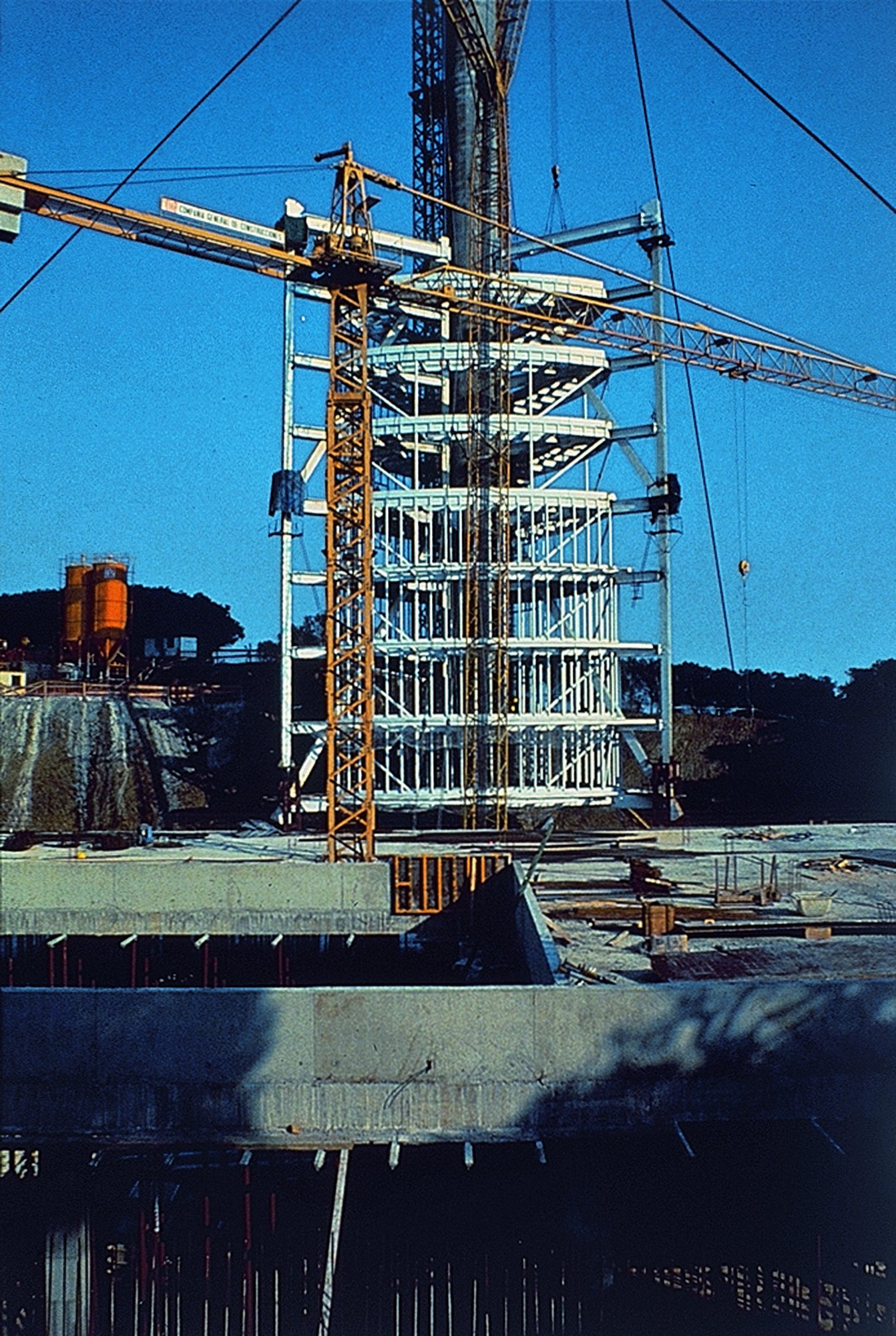
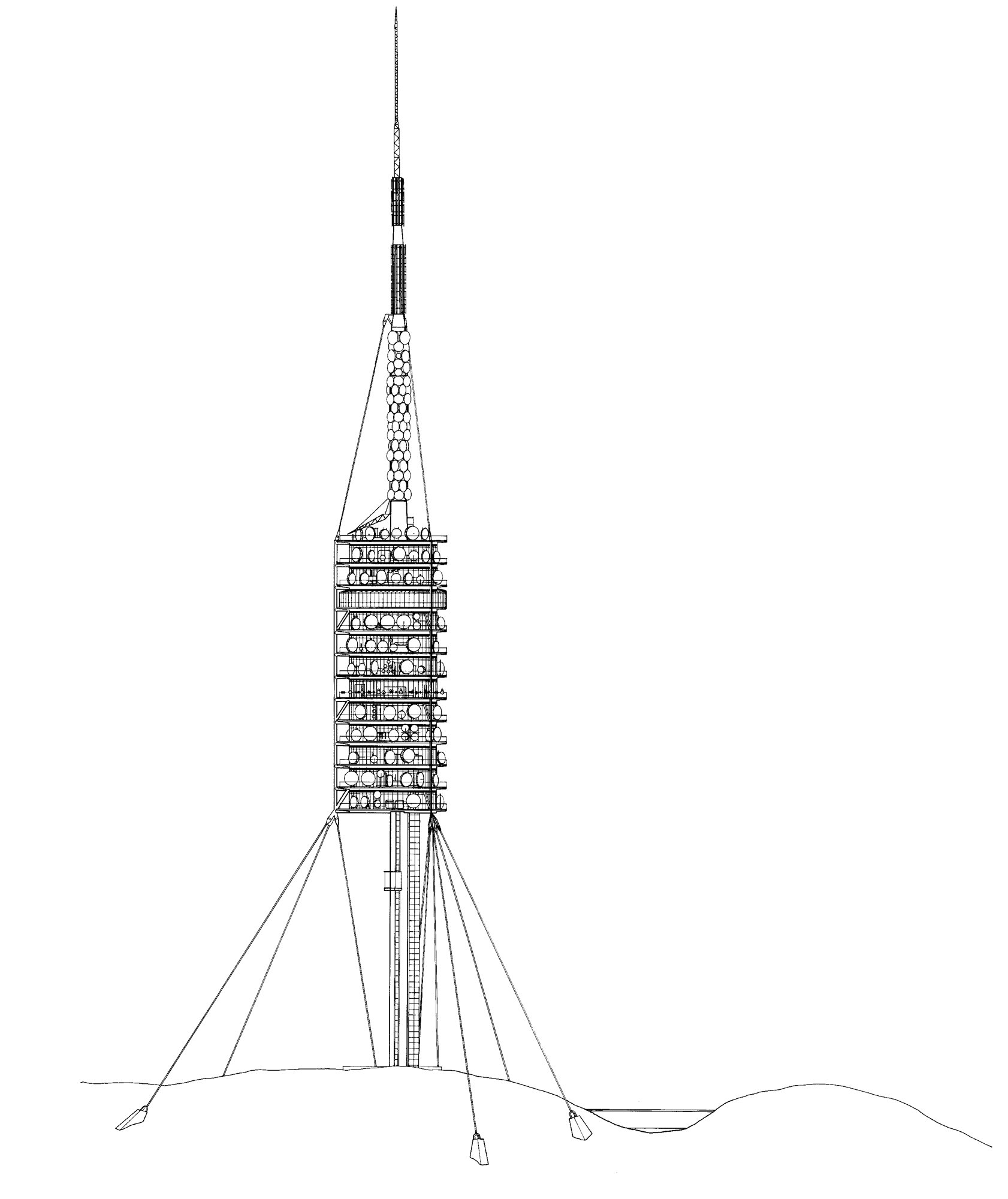
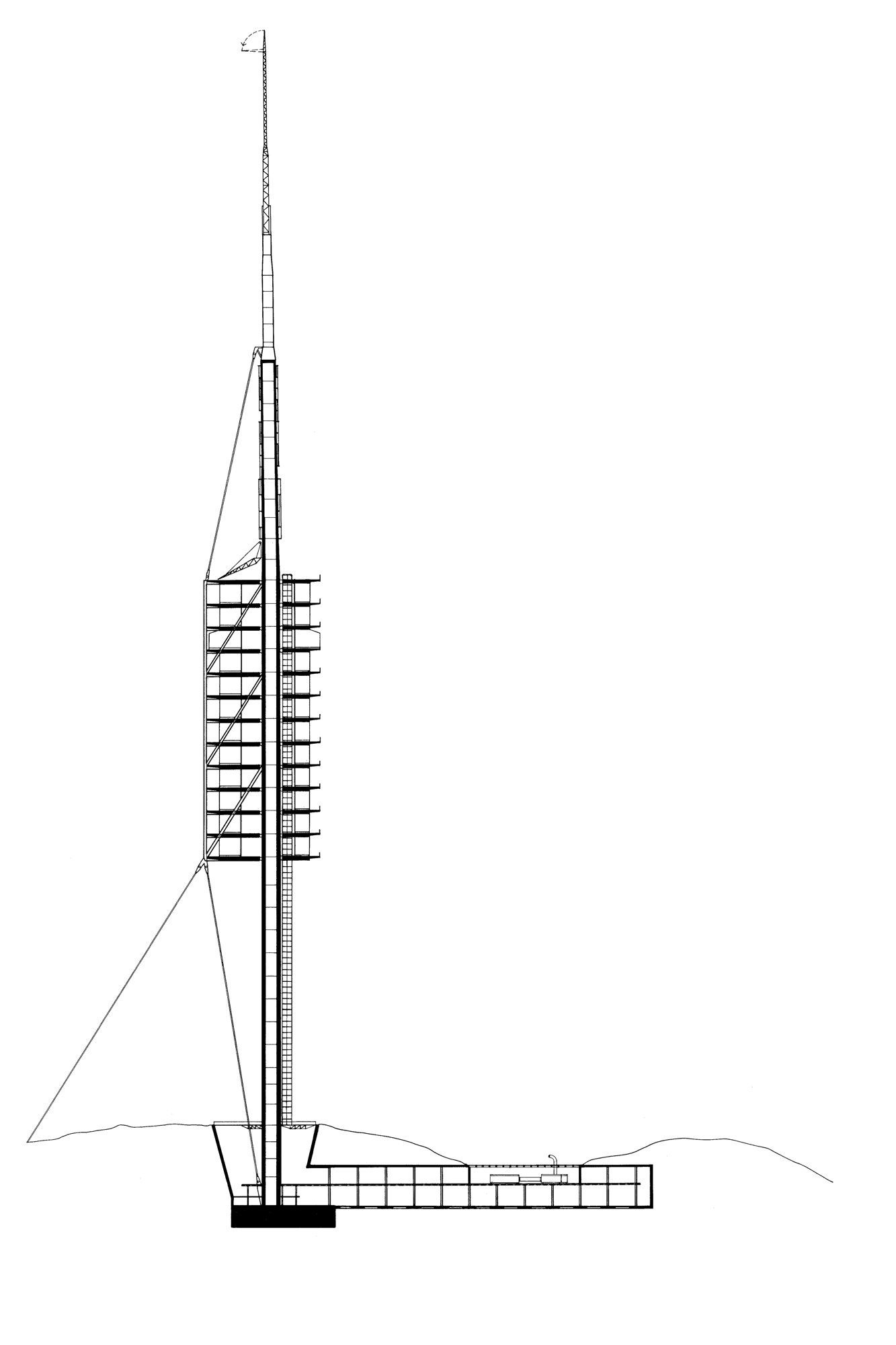
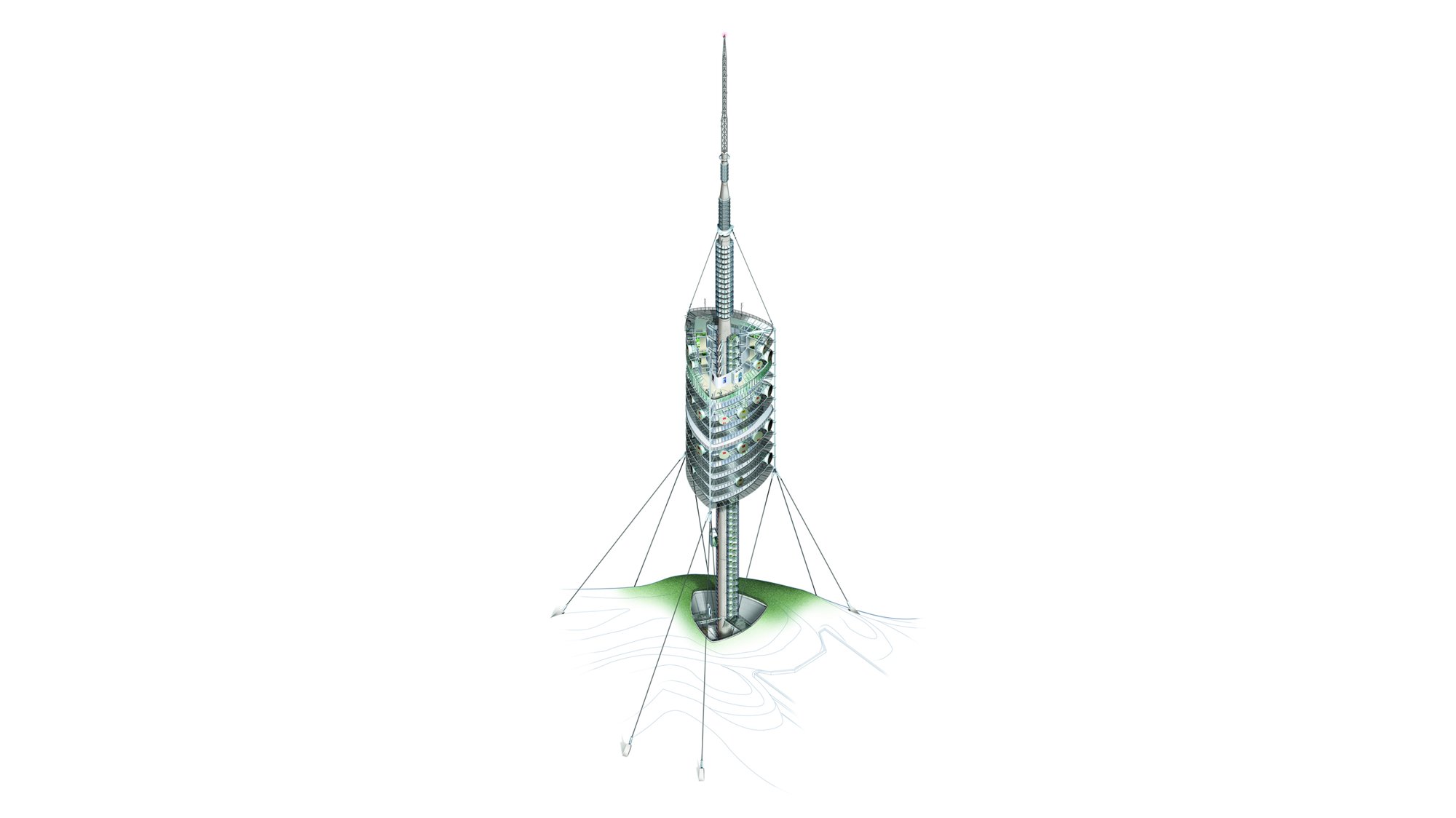
A conventional reinforced-concrete tower would have required a shaft with a 25-metre-diameter base in order to achieve the 288-metre height required. Following an analysis of precedents, including suspension bridges and shipbuilding techniques, an entirely new structural concept emerged: a hybrid concrete and steel-braced tube, with a base diameter of only 4.5 metres, which minimises the towers impact on the mountainside. In order to meet a construction programme of just twenty-four months the construction of shaft, mast and equipment decks was overlapped. As the shaft was poured, the steel-framed decks and public viewing platform were assembled on the ground ready to be jacked, inch by inch, into position. In a final flourish, the steel radio mast was telescoped inside the hollow shaft.
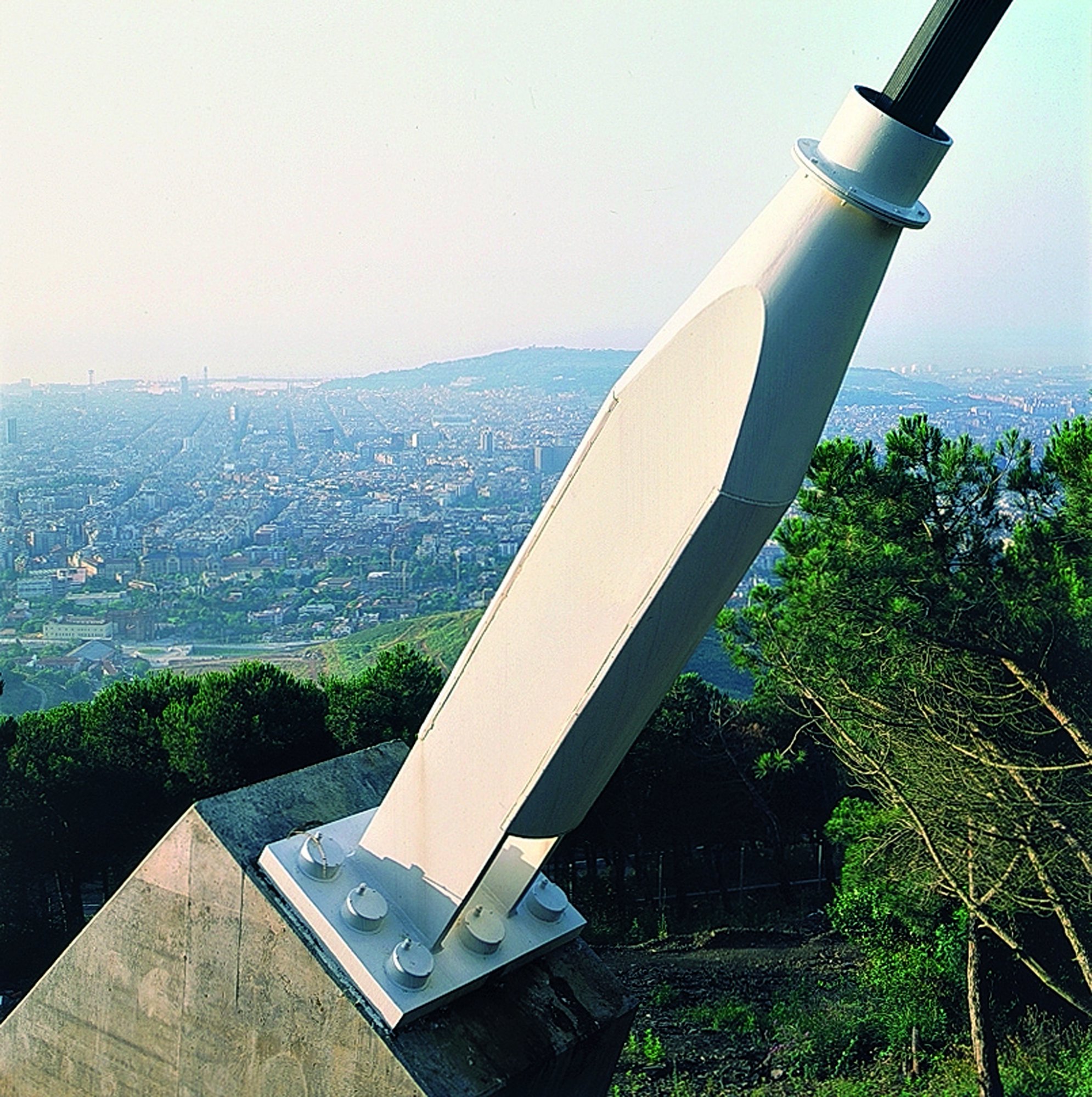
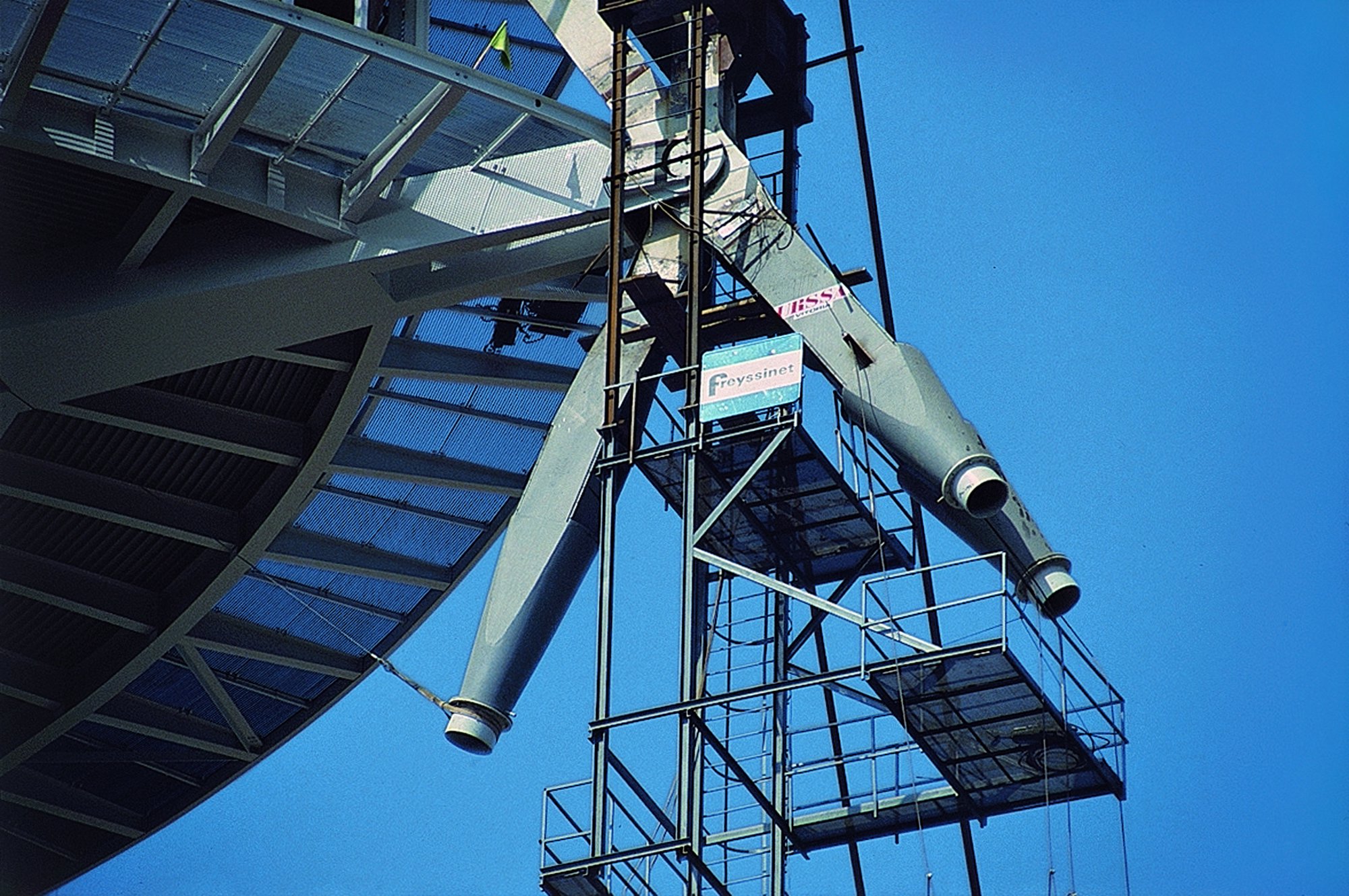
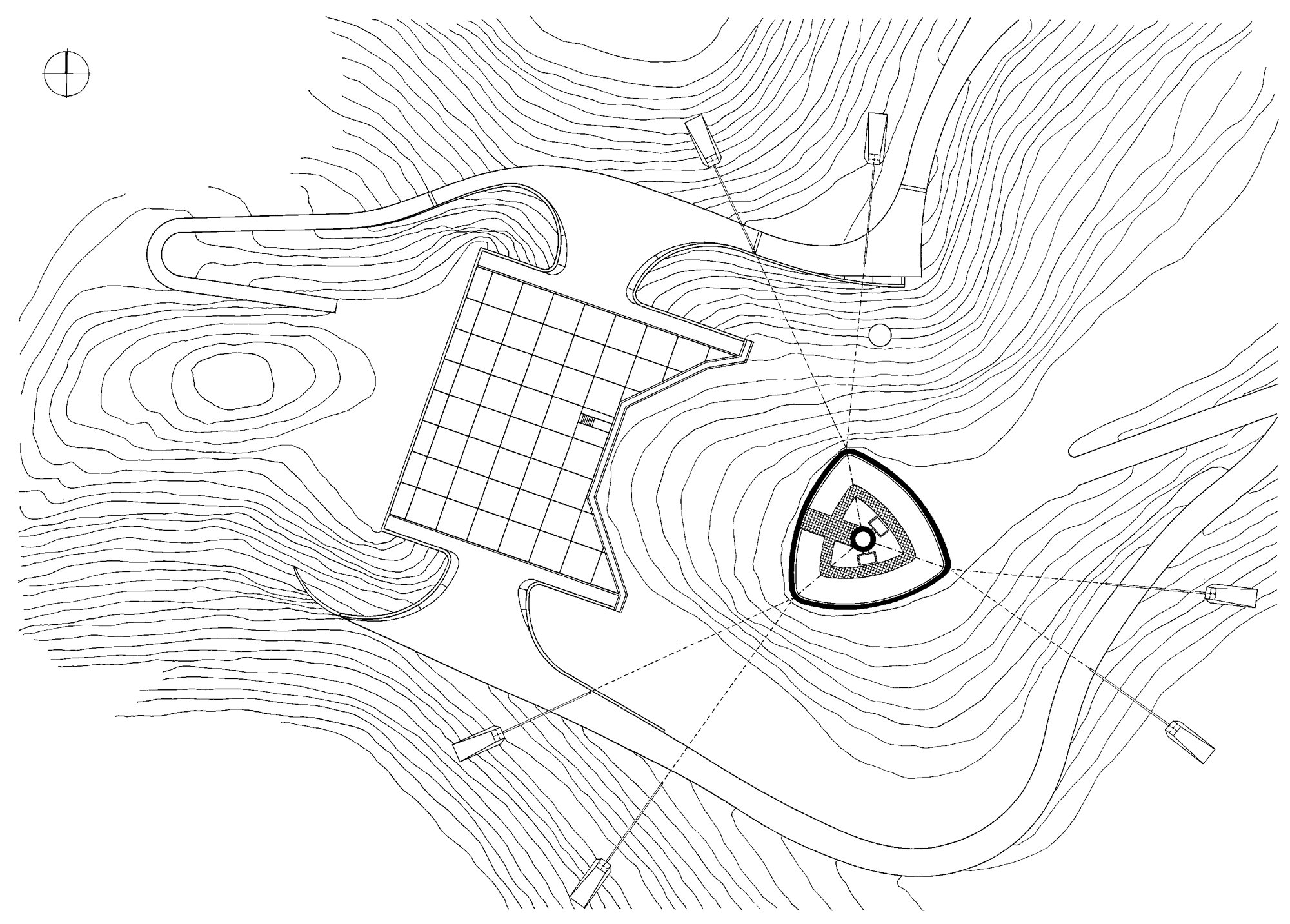
The equipment decks are suspended from the shaft by three primary trusses and braced by Kevlar cables, which are transparent to broadcasting signals. Equipment is installed or removed by lift, and a crane at the top of the mast hoists antennae into place. Inherent flexibility ensures that the tower is able to respond to a rapidly evolving telecommunications future.